
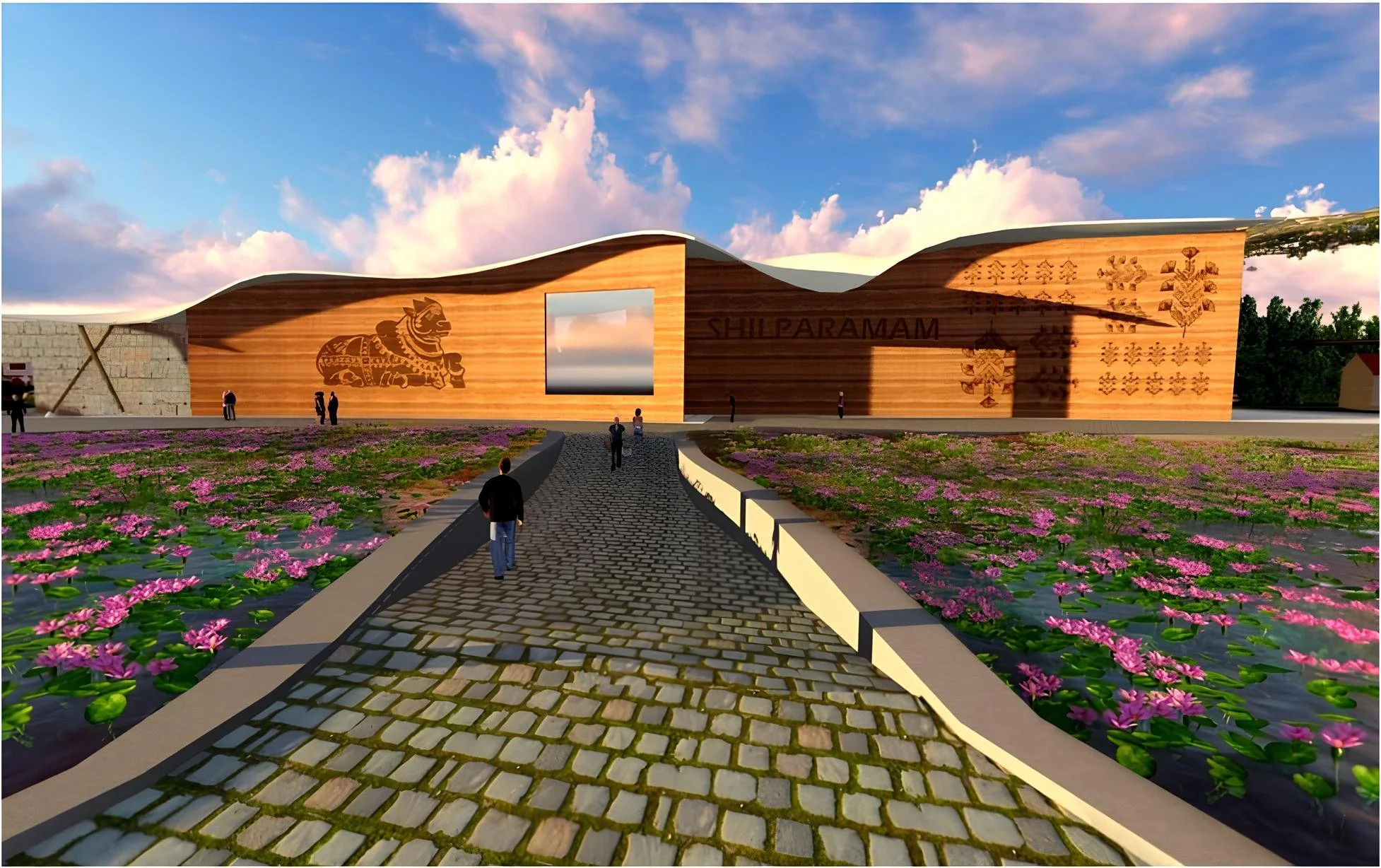
Shilparamam Arts, Crafts, and Cultural Center
About
Shilparamam in Anantapuramu redevelops as a master-planned cultural, recreational, and economic hub amid regional growth, serving as a Bangalore-Hyderabad stopover. It upgrades existing stalls, food court, sculpture park, boating area, amphitheatre, and multipurpose hall while adding an entry interpretation center on Anantapur and Andhra Pradesh arts/crafts.A 50-stall artisan village in clusters offers shared spaces and artisan accommodation, alongside an expanded food court, guest house, amusement park, exhibition areas, auditorium, and a resort zone with cottages, rooms, spa, and bio pool.
Landscape restores ecology with indigenous plants, biodiversity boosts, ponds, and channels. Pedestrian paths prioritize movement, limiting vehicles to electric options. Phased over three stages, it generates early revenue from key attractions before full cultural, recreational, and ecological rollout. The result is a destination that feels alive, walkable, and immersive, offering visitors both local craft experiences and a visually rich leisure environment.
Location: Anantapuramu, Andhra Pradesh, India
Client: Shilparamam, Govt of AP
Project Area: 100 Acres
Project Type: Master Plan Development / Cultural & Recreational Campus
Construction : Yet to start,Phased Development (3 Phases)
Project at a Glance
-
Primary/Low-Energy Materials
Local materials such as stone, mud, bamboo, local timber; natural materials for interiors with involvement of local craftsmen and artists.
Water Conservation
Rainwater harvesting and management for the entire site; approximately 1.6 crore liters of water available per acre per year (total ~101 crore liters); reuse through pond and overflow channel.
Sewage Systems
STP, dry waste digester, composting for waste management.
-
Renewable Energy Systems
Energy generation from alternative sources like solar, wind and biomass with minimum grid support.
-
Framing / Structure
Eco-friendly buildings using traditional technologies.


